
The expensive problems are the ones you’ve stopped noticing.
FlatOut Solutions is a custom software company headquartered in Tucson, Arizona. We build the operating systems growing businesses run on, and the products SaaS founders sell.
Manual work rarely looks like a crisis.
It looks like the spreadsheet nobody dares touch, the workaround only one person understands, and the double-check that happens every Friday. The cost shows up somewhere else: a mistyped date on a bid, a quote sent with last month’s prices, a key person who burns out. We look for those costs first, because they’re usually far larger than the minutes anyone is counting.
Our client Aaron Fraser, founder of RAD Pit Crew, puts the alternative simply:
“I’d rather scale with software… once it’s dialed in, it does the same thing over and over.”

Nothing is impossible. It’s just a matter of time and money.
When someone has been told their idea can’t be built, it usually means no one looked hard enough at where the data lives or how the process really works. We’d rather give you an honest estimate of what it takes, and what the return looks like, than a quick no. Time and money are real constraints, and we’ll be specific about both.
You don’t have to know exactly what you need.
Most clients arrive with a problem, not a specification, and that’s the right place to start. Our job is to close the gap between what’s slowing your business down and what software can do about it. We lay out the options, explain the trade-offs, and tell you when a different approach would serve you better, even when it means not working with us.
Built by someone who’s sat on your side of the table.
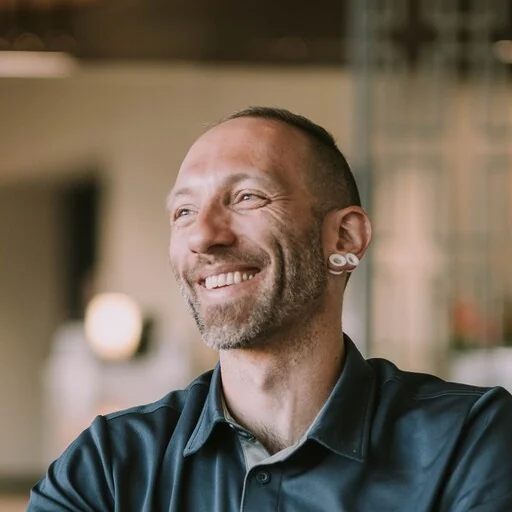
Stefan Asseg has spent years on the business side: buying and running companies, and leading a marketing agency where nearly every project turned into a technology project. Across all of it, he kept seeing the same thing. Technology was the bottleneck, and most owners didn’t know it. They hired more people, bought more tools, and worked more weekends, when the real constraint was the system underneath.
He’d also seen how software usually gets built, both inside large companies and at the firms his clients had hired before. Messages passed through layers of project managers, clients couldn’t see the work, and contracts left them owning less than they thought. FlatOut is built to work the other way.
Good software changes more than a business’s output. It changes how the people inside it spend their days. For one client, that meant being able to go to lunch again.
Small teams, on purpose.
FlatOut is a small senior team of product engineers, led by technical leads who work inside the team instead of managing it from outside. We use AI to speed up the engineering itself, and experienced engineers make every decision that matters.
When a technical lead joined us from a 12-person team, he found his three-person FlatOut team produced more. Clients notice the difference. One asked us to send an engineer her way if we ever stopped needing him.

What a week with us looks like.
You’ll meet with us every week and get updates in between. When something needs attention, it gets handled right away, not saved for the next meeting.
On those calls you’ll see the whole team, not a single representative.
When we need something from you, we explain what and why, usually in a short recorded walkthrough, so you’re never guessing at what’s holding a project up.
“Having your entire team on like you guys do is hands down the way to go.”
Four questions to ask any software firm, including us.
Several of our clients came to us after a project with another firm went wrong. What they learned holds for anyone you’re considering.
01Who owns what you build?
Joey Mascio’s previous contract seemed clear, and the firm disputed what he owned anyway. His advice: “Be aware of short, nebulous contracts.” Ask for ownership of the design, code, and infrastructure to be spelled out.
02What will it cost?
A firm that tells you not to worry about pricing is asking you to worry later. You should know what you’re paying for before the work starts.
03Who will you actually talk to?
Yvette Long’s previous firm gave her one project manager shadowing a junior developer, billed as a team of three, reachable only by email, and meetings that lost their momentum over the weekend. “Until I engaged you guys, I didn’t realize how lacking they were.” Ask to meet the engineers who will build your system.
04When will you see something work?
Eight months without working software is a warning sign long before month eight. Any firm should be able to tell you when you’ll see progress you can use.